


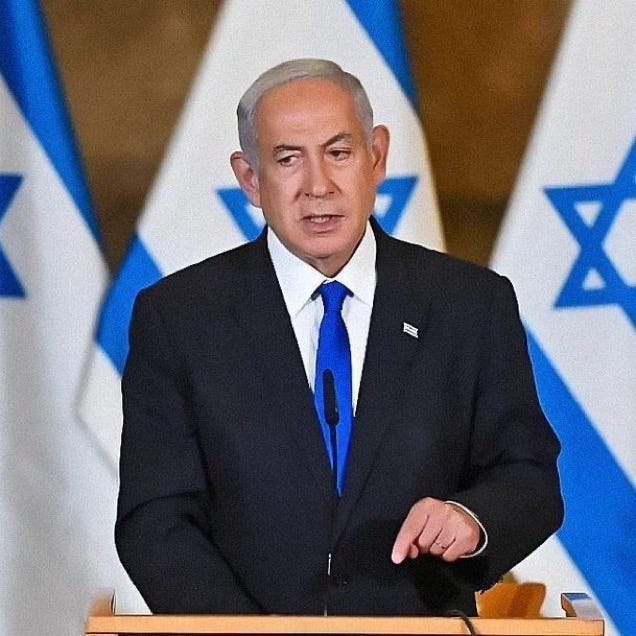
The accusation of antisemitism has become one of the most powerful rhetorical weapons in contemporary discourse. When deployed against those who criticise the policies of the Israeli government — particularly its actions in Gaza, the West Bank, Lebanon, and beyond — it often functions less as a defence against real Jew-hatred and more as a shield for state crimes and Western complicity.
This is not a fringe observation. It is a pattern repeatedly documented by journalists, human rights organisations, and Jewish groups themselves.
The Conflation Problem
Criticism of Zionist settler-colonial ideology and specific actions by the Israeli state — settlement expansion, collective punishment, disproportionate military force, blocking of aid, destruction of civilian infrastructure — is routinely labelled antisemitic. This conflation is not accidental. It has been actively encouraged by figures like Netanyahu and aligned lobbying organisations.
The result is a chilling effect: journalists, academics, activists, and ordinary citizens self-censor for fear of being branded bigots. Meanwhile, real antisemitism — hatred of Jews as Jews — is cheapened and made harder to confront when the term is stretched to cover political disagreement.
Media Double Standards
The BBC and much of the Western mainstream media have been forensically criticised for this asymmetry. Reports on Israeli civilian deaths frequently include names, stories, and humanising detail. Palestinian civilian deaths — including thousands of children — are often reduced to statistics or framed as tragic but inevitable “collateral damage” in a “complex conflict.”
Defensive or retaliatory actions by Palestinians, Lebanese, or Iranians are stripped of context (decades of occupation, blockade, repeated military operations). Israeli actions are almost reflexively given the benefit of “self-defence.” This is not balanced journalism. It is narrative management.
Independent monitors (Glasgow Media Group, Media Lens, The Electronic Intifada) and even some former BBC insiders have highlighted this pattern for years. The 2006 BBC Trust report and subsequent analyses showed systemic bias in language, framing, and sourcing.
When Criticism Crosses the Line
To be clear: there is a line. Criticism becomes antisemitic when it:
• Holds all Jews responsible for the actions of the Israeli government.
• Revives classic conspiracy tropes (Jewish control of media, finance, governments).
• Denies Jewish historical ties to the land while applying standards to Israel not demanded of any other state.
• Calls for the destruction of Israel in a way that implies ethnic cleansing of Jews.
These are not legitimate political critique. They are prejudice.
However, pointing out documented war crimes, violations of international law, or the influence of lobbying groups like AIPAC is not antisemitic. Many Jews — including inside Israel and organisations such as Jewish Voice for Peace, Independent Jewish Voices, and B’Tselem — make these same criticisms.
The Real Minefield
The weaponization of antisemitism accusations serves a clear function: it protects powerful actors from accountability. When politicians receiving substantial pro-Israel funding defend or enable actions that multiple international bodies have described as meeting the criteria for genocide, the response should be political and moral scrutiny — not reflexive deployment of the antisemitism charge to shut down debate.
The BBC and other outlets have contributed to public confusion by failing to maintain forensic standards. This failure breeds cynicism and, in some cases, spills over into genuine antisemitism. The cycle is self-reinforcing.
A Unitive Path
We must hold two truths simultaneously:
1. Real antisemitism exists and must be opposed unequivocally.
2. Legitimate, evidence-based criticism of Israeli government policy, settler-colonial practices, and Western complicity is essential for justice and must be protected.
The solution is not to abandon the term “antisemitism” but to use it with precision. The solution is journalism that applies consistent standards, politicians who refuse to let donor money override international law, and citizens who demand truth over narrative control.
History will judge not only the perpetrators of atrocities but also those who enabled them while silencing dissent with smears. The living commons demands better: moral clarity, intellectual honesty, and the courage to name power without descending into hatred of any people.
We will continue to speak plainly.
✊🌎❤️
Niel / eaarthnet