

Genocide by enforced starvation
Stop calling it a famine (BBC et Al), it is the starvation of Palestinians, held hostage, in an open concentration camp called Gaza. This is the harsh reality.

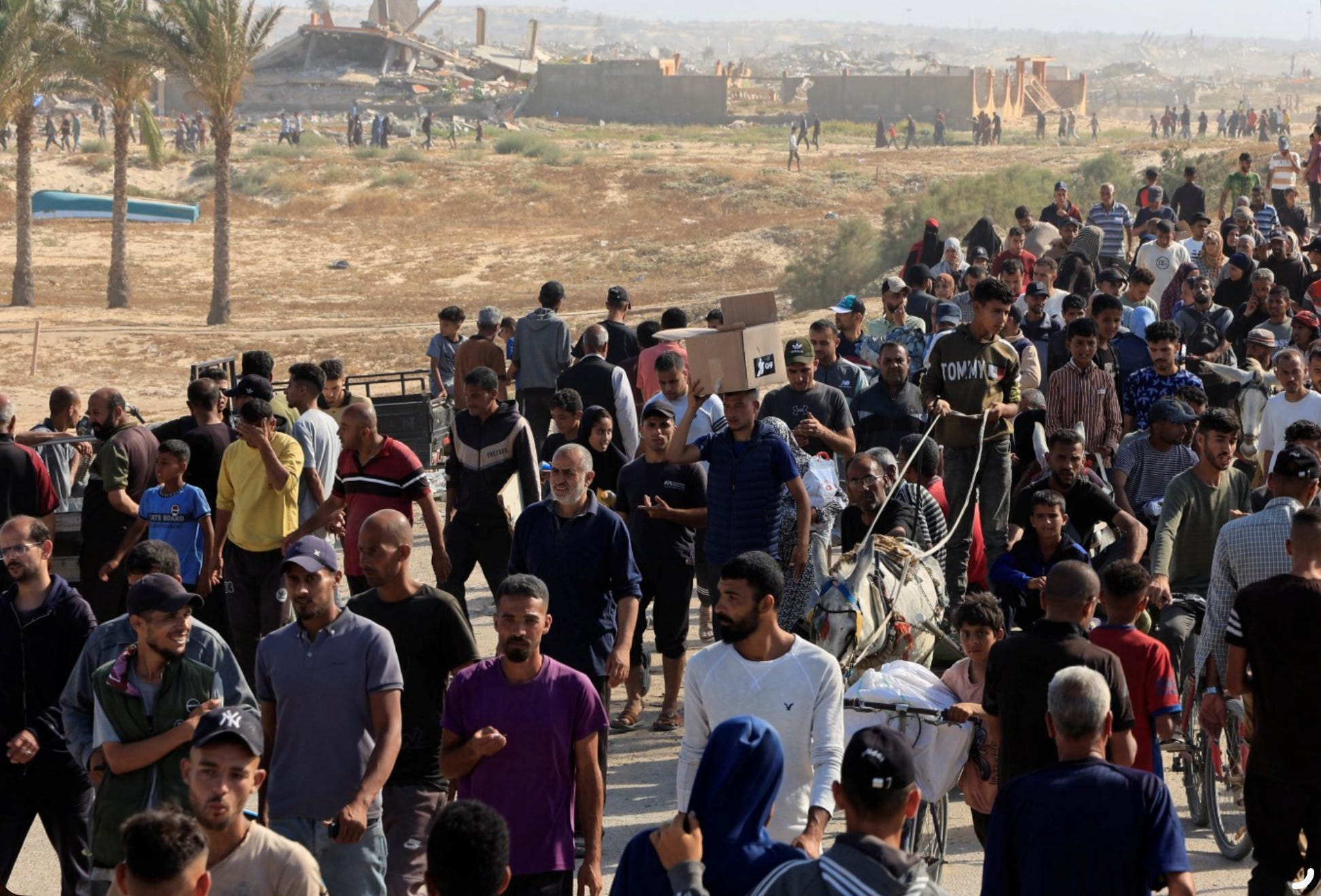
A warning to all journalists, anchors, news editors, politicians, civil servants, some judiciary ,the mislead police force and a greedy corporates.
Your actions, no matter how you fabricate these dubious and illegal laws, there will be days of reckoning, firstly from an enslaved public, whose freedom of opinions on the rights & wrongs of the massacre of innocents, babies & infants have been trashed by authoritarian Orwellian politicians and ignorant police forces erroneously arresting innocent folks.
Human rights organisations and experts have strongly criticised the UK’s decision to designate Palestine Action as a terrorist organisation under the Terrorism Act 2000, arguing it misuses counter-terrorism laws and threatens civil liberties. Key points from their statements include:
UN Human Rights Chief Volker Türk** called the ban “disproportionate and unnecessary,” warning it risks hindering fundamental freedoms like expression, assembly, and association. He criticised the UK’s broad definition of terrorism, which includes “serious property damage,” arguing that international standards limit terrorist acts to those intended to cause death, serious injury, or hostage-taking to intimidate or coerce. Türk urged the UK to rescind the ban and revise its counter-terrorism laws to align with human rights norms, noting over 200 arrests of peaceful protesters since the proscription took effect on July 5, 2025.[](https://www.bbc.co.uk/news/articles/cdjxjpl8g0do)[](https://www.ohchr.org/en/press-releases/2025/07/uk-palestine-action-ban-disturbing-misuse-uk-counter-terrorism-legislation)
UN Special Rapporteurs**, including Ben Saul and Irene Khan, expressed concern over labelling a political protest movement as “terrorist,” stating that property damage without intent to harm people should not be treated as terrorism. They warned the ban could criminalise legitimate activities like membership or public support, carrying penalties of up to 14 years in prison, and have a “chilling effect” on advocacy for Palestinian human rights. They emphasised that such actions should be investigated as ordinary crimes, not terrorism.[](https://www.ohchr.org/en/press-releases/2025/07/un-experts-urge-united-kingdom-not-misuse-terrorism-laws-against-protest)
Amnesty International** described the proscription as “unprecedented legal overreach” and a violation of freedoms of association and expression. They criticised the UK’s overly broad terrorism definition, which allows authorities to suppress speech deemed supportive of a proscribed group, even recklessly. Amnesty warned this could restrict public discourse on Palestinian rights and set a dangerous precedent for other protest groups, urging MPs to vote against the ban.[](https://en.wikipedia.org/wiki/Palestine_Action)[](https://www.amnesty.org.uk/resources/open-letter-members-house-commons-and-peers-house-lords-regarding-palestine-action)
Human Rights Watch** condemned the move as a “grave abuse of state power” and a “terrifying escalation” in curbing protest rights, comparing it to tactics used by authoritarian regimes. They argued it undermines the democratic freedoms the UK claims to uphold.[](https://www.bbc.co.uk/news/articles/c2d0j0ljdzko)
Civil Liberties Groups** like Liberty echoed concerns, calling the ban a conflation of protest with terrorism and questioning its propriety, particularly given the UK’s history of tolerating direct action protests without resorting to terrorism laws.[](https://en.wikipedia.org/wiki/Palestine_Action)
These organisations collectively argue that proscribing Palestine Action conflates non-violent protest and property damage with terrorism, erodes democratic rights, and stifles dissent, particularly regarding UK complicity in Israel’s actions in Gaza. They highlight the need for proportionate responses under existing criminal laws rather than draconian counter-terrorism measures.
Followed by international courts that will pursue those who have given cover to Israeli genocide, then those who have profited financially from this bloodfeast of immorality, & not just the arms industry, but those companies that own our military services
RAF Brize Norton itself is not contracted out to a private company; it remains owned and operated by the UK Ministry of Defence (MoD) as a Royal Air Force station. However, specific services and operations at the base, including the management of certain aircraft, are contracted to private companies. Notably, the Airbus A330 MRTT Voyager aircraft, which were damaged in the Palestine Action incident, are operated by AirTanker Services under a Private Finance Initiative (PFI) contract with the MoD, known as the Future Strategic Tanker Aircraft (FSTA) programme. AirTanker Services, a consortium including companies like Airbus, Rolls-Royce, and Thales, is responsible for providing and maintaining the Voyager fleet, which supports air-to-air refuelling and transport roles. Additionally, other contractors such as Boeing, Serco, and ISS provide support services at the base, including maintenance and logistics, but the MoD retains overall control of the station
The international courts have deemed that Israel & consequently those assisting are “probably committing genocide”, that is aside from israels long-standing apartheid, illegal occupation of Palestinian territories & long litany of war crimes. Evidence from many countries has accumulated & documented multiple concrete evidence.
As of 12:14 PM BST on Friday, August 1, 2025, I’ll provide a detailed analysis of actions by Israel that have been identified as contravening international law, specifically as espoused by the United Nations (UN). This is based on UN resolutions, reports from UN bodies (e.g., General Assembly, Security Council, Human Rights Council), and related international legal frameworks such as the Geneva Conventions and the Rome Statute of the International Criminal Court (ICC). The focus will be on actions documented up to the present date, with an emphasis on the ongoing Israel-Hamas conflict and the occupation of Palestinian territories. Note that while some actions are deemed violations by UN entities, Israel disputes many of these findings, and legal determinations (e.g., by the ICJ or ICC) are often provisional or pending.
Legal Framework
International law relevant to this analysis includes:
The Fourth Geneva Convention (1949) protects civilians in occupied territories by prohibiting collective punishment, forced displacement, and settlement expansion.
Hague Regulations (1907)**: Governs the rights and duties of an occupying power, including the prohibition on annexing occupied territory.
Rome Statute (1998)**: Defines war crimes, crimes against humanity, and genocide, enforceable by the ICC.
-UN Resolutions**: Binding (e.g., Security Council) or non-binding (e.g., General Assembly) statements of international consensus.
Actions Contravening International Law
The following actions have been cited by UN bodies as violations, with supporting evidence from UN reports, resolutions, and investigations:
1. Settlement Expansion in the Occupied Palestinian Territory
UN Position**: UN Security Council Resolution 2334 (2016) declared Israel’s settlement activities in the West Bank, including East Jerusalem, as having "no legal validity" and constituting a "flagrant violation" of international law, specifically the Fourth Geneva Convention (Article 49). The resolution reaffirms that these settlements are a major obstacle to a two-state solution.
Details: Since 1967, Israel has established over 130 settlements in the West Bank and East Jerusalem, housing approximately 450,000 settlers (UN OCHA, July 2025). Recent data shows continued construction, with 9,700 new housing units approved in 2024 alone (Peace Now, cited in UN reports). The UN Human Rights Council’s 2022 database of settlements identifies these as illegal under Article 49(6), which prohibits an occupying power from transferring its civilian population into occupied territory.
Impact: Displacement of Palestinians, demolition of homes (1,226 structures in 2024, UN OCHA), and restriction of movement, violating rights to property and self-determination.
2. Use of Excessive Force and Civilian Casualties in Gaza
UN Position: The UN Human Rights Council’s Commission of Inquiry (COI) report (presented October 2024) and multiple General Assembly resolutions (e.g., A/RES/ES-10/24, 2024) have condemned Israel’s military operations in Gaza since October 2023 as involving excessive and disproportionate force, constituting war crimes under international humanitarian law (IHL).
Details: The Gaza Ministry of Health reports over 40,000 Palestinian deaths since October 2023, with 70% estimated as non-combatants (The Lancet, June 2025). The COI found attacks on medical facilities (e.g., Al-Shifa Hospital, November 2023) and schools, violating IHL principles of distinction, proportionality, and precaution (Geneva Conventions, Articles 18 and 19). The use of white phosphorus in populated areas (Human Rights Watch, December 2023) is cited as a potential war crime under the Chemical Weapons Convention.
-Impact: Widespread civilian harm, destruction of 60% of Gaza’s infrastructure (UNRWA, July 2025), and a humanitarian crisis with 1.9 million displaced.
3. Imposition of a Blockade and Collective Punishment
UN Position: The UN Special Rapporteur on the situation of human rights in the Palestinian territories (Francesca Albanese, 2024 report) and Security Council debates have labelled Israel’s blockade of Gaza (imposed since 2007, tightened October 2023) as collective punishment, prohibited under Article 33 of the Fourth Geneva Convention.
Details: Defence Minister Yoav Gallant’s October 9, 2023, statement ("No electricity, no food, no fuel") and the subsequent siege have restricted essential supplies, leading to acute food insecurity affecting 2.2 million people (IPC Famine Review, May 2025). The UN Office for the Coordination of Humanitarian Affairs (OCHA) reports that only 20% of the needed aid entered Gaza in 2024.
Impact: Starvation risks, with 1.1 million people facing catastrophic hunger, and denial of basic rights to health and life.
4. Forced Displacement and Evictions
UN Position: Resolution 2334 (2016) and the COI (2024) highlight forced displacement in the West Bank and Gaza as violations of the Fourth Geneva Convention (Article 49) and the right to self-determination under the International Covenant on Civil and Political Rights.
Details: In Gaza, the Rafah evacuation (April 2025) displaced 100,000 people, with Israel citing military necessity (UNRWA). In the West Bank, 1,000 Palestinians were displaced in 2024 due to demolitions and settler violence (OCHA). Plans for "thinning" Gaza’s population, as suggested by some officials (e.g., Itamar Ben-Gvir, January 2025), align with U.S. relocation proposals but lack official endorsement.
Impact: Loss of homes, cultural ties, and increased vulnerability to violence.
5. Detention and Ill-Treatment of Palestinians
UN Position: The COI (2024) and the UN Committee Against Torture (2025 report) found that Israel’s detention practices, including administrative detention without trial and torture of Palestinians, violate the Fourth Geneva Convention (Article 76) and the Convention Against Torture.
Details: Over 9,000 Palestinians, including 250 children, are detained, with reports of beatings, sexual violence, and prolonged solitary confinement (Addameer, July 2025). The UN documented 12 deaths in custody since October 2023.
Impact: Psychological trauma and human rights abuses, constituting potential war crimes.
6. Annexation of East Jerusalem
UN Position: Security Council Resolutions 476 (1980) and 478 (1980) declare Israel’s annexation of East Jerusalem "null and void" and a violation of the Fourth Geneva Convention and the Hague Regulations.
Details: Israel’s 1980 "Basic Law" claiming Jerusalem as its capital, combined with settlement expansion (e.g., 2,200 units approved in 2024), continues to alter the city’s demographic and legal status. The UN General Assembly (A/RES/76/228, 2021) reaffirmed this stance.
Impact: Restriction of Palestinian access to holy sites and erosion of a two-state solution.
7. Attacks on UN Personnel and Facilities
UN Position: The UN Secretary-General’s 2024 report on the protection of civilians condemned attacks on UN personnel and facilities in Gaza, violating IHL (Geneva Convention, Article 17) and UN privileges (Convention on Privileges and Immunities, 1946).
Details: Since October 2023, 196 UN workers have been killed, and 140 UN facilities damaged (OCHA, July 2025). Incidents include strikes on UNRWA schools sheltering civilians.
Impact: Undermines humanitarian operations and civilian safety.
Legal Status
ICJ: The January 2024 provisional ruling on South Africa’s genocide case found a plausible risk but no final violation. A full ruling is pending (expected late 2025).
ICC: Arrest warrants are sought for Israeli officials (e.g., Netanyahu, Gallant) for war crimes, with decisions expected by late 2025.
UN Consensus: General Assembly resolutions (e.g., ES-10/24) reflect widespread condemnation, though Security Council action is limited by U.S. vetoes.
Conclusion
These actions—settlement expansion, excessive force, blockade, displacement, detention abuses, annexation, and attacks on UN facilities—contravene international law as per UN interpretations. The scale and intent (e.g., genocide allegations) remain under investigation, but the violations are well-documented by UN bodies
If all this is to be dismissed by those officials outlined at the top of this article in defence of the Israelis, then this is the possible scenarios to explain (defence is not a legitimate excuse for occupying forces)
The following reasons why certain individuals & groups support the act of genocide and denigrate those with a moral compass.
Undeclared trillionaires and also billionaires who are wedded to personal enrichment over a fair & balanced society.
2. Individuals and groups dependant on funding from the elite corporate largesse.
Personal egoic advancement in the establishment order of elitist societies. Forlock triggers.
Thought slaves to supremacist ideologies that favour the individual over the community
Those whose employment is dependent on elites direction.
🔏The bracketed quotes are from questions we put to AI searches.