

Cooke-greuter: self-consciousness stage 3/4 expert
people who are now able to step back and look at themselves as objects from a distance

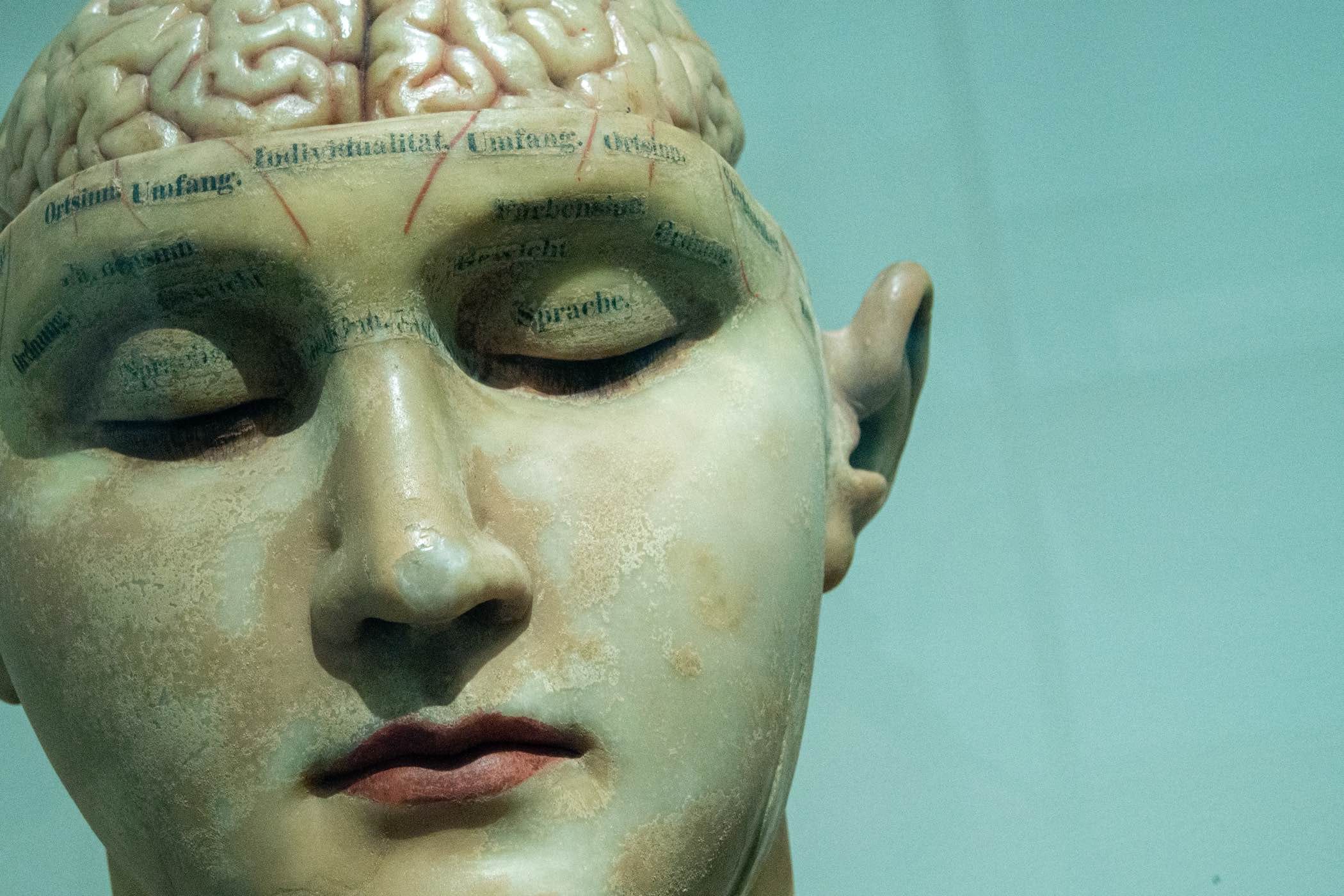
The Expert or Technician Stage;
stage 3/4 Stage 3/4 or the Self-conscious stage characterizes people who are now able to step back and look at themselves as objects from a distance. They can see themselves as object and thus start to reflect upon the self. A conceptual watershed is crossed when one can take the third person perspective. This stage has a distinctly different clinical feel. Individuals begin to be capable of some introspection and self-understanding. It also means they need to differentiate themselves from the immediate family context and assert and express their newly discovered personhood. The third person perspective permits operations with abstract objects and concepts.
Individuals are good at seeing alternatives. They can use them with a vengeance - offering innumerable solutions and permutations for every problem. At stage 3/4 one becomes aware of general “traits” in others i. e. familiar character patterns people display over time as part of the new experience of self in linear time. This orientation towards patterns in behavior and the beginning self-consciousness lead to an interest in sharing more of one’s inner nature. One becomes interested in describing more differentiated traits (lonely, jealous, serious), norms (feminine), and conventional virtues (honest, patient). The focus on likeness at the Conformist stage changes to focus on individual differences at the Self-conscious stage 3/4. People start to express their own personhood more often in contrast to others. They also assert more of their own needs and wants, which were suppressed at stage 3 for the sake of being accepted.
The Self-Conscious Stage 3/4 (Expert)
However, now they want to be accepted by others because of their difference. They also tend to want to be better than others, stand out from the crowd. The group is needed, but one stands at its periphery threatening to leave, without ever quite leaving. Stage 3/4 persons often feel they have “figured it all out.” They know all the answers. They know what to believe. They feel righteous and often put others in the wrong (resistance). They have high moral standards and a strong sense of what should be. They are concerned with fulfilling their responsibilities and duties. They often display compulsive and perfectionist tendencies. The super-ego is very strong. Others are evaluated according to one’s own capabilities and standards. Severe criticism of how another thinks is a common form of intellectual aggression at this stage. A sense of superiority is not very well hidden. This stage is a very resistant and stable. No one can tell a Self-conscious person anything they don’t know already or know better. Self-conscious individuals will discredit material that does not fit into their scheme by dismissing counter-evidence or belittling others.
In interpersonal situation the “yes, but” syndrome is very common. One-upmanship - that is, listening to the other and then adding one’s own opinion to remain on top - is typical. On the plus side, Self-conscious people are very adept at finding new and different solutions, better ideas, more perfect procedures. Adolescents as well as adults at this stage see multiple possibilities and alternative solutions. If managed skillfully, their positive contributions can be considerable. Because their process is additive, people at this stage cannot yet prioritize among options or synthesize several possibilities. They don’t know when good is good enough.
While Conformists try to suppress aggression for the sake of acceptance, it now reemerges. Self-conscious individuals often have a hostile sense of humor. Ridiculing others is a common sport. While there is a cognitive capacity to look inside, one’s defense is to be ultrarational. Rather than being followers or bystanders - the preferred roles of the Conformist - Selfconscious persons may relish being movers, and initiators. They enjoy oppositional battles with others who defend different positions. They live in a world where things are sure and clear, and they feel very much entitled to impose their views on others. Thus they can seem very argumentative and opinionated..
3 1 2 Third person perspective: Self and others as separate persons with unique differences
Cognition: 4a abstract operations; beginning ability to take a 3rd person perspective or to look at oneself objectively
Self: Separate self differentiated from others; sense of specialness. Identity = clusters of external attributes, conventional traits, “selfconscious” in the sense of readily feeling uneasy.
Other: others too are seen as separate persons who are different from me. Need for constant comparison
Impulse control: Self-conscious persons have societal shoulds and oughts well internalized. Their super-egos are strong and not available for inspection. Feelings of shame and guilt for transgressions are expressed in simple terms or rationalized away.
Cognitive style: Self-conscious persons are capable of abstract thought and operations, including multiple views, permutations, and careful comparison between pairs of items.
Internal dimension: “Psychology” is understood in terms of stable moods and traits of self and others. Self-conscious persons tend to generate innumerable solutions without being able to prioritize among them. The decision process gets often hung up. See Perry (1968) on multiplicity. The necessary synthesis and analytical weighing of different solutions develops at the next stage.
Organizational type: Engineering types, technocrats, bureaucrats, and a percentage of professionals of every ilk are at home here. Being in charge of oneself and one’s environment is chief trait. Self-conscious individuals have a clear-minded, pragmatic leadership style (because unencumbered by fundamental questions and complexities). “Do what I do.” Self-conscious people are necessary for running the routine affairs of every society and every group. They may prosper especially well in today’s highly technological and digitally-coded world.
Chief defenses: Self-conscious people intellectualize, rationalize and explain away what doesn’t fit their expectations or set beliefs. They are rarely lost for an answer or an explanation. They often blame the structure, the tools, or the incompetence of others for what is not working as it should.
Counseling style: As managers and consultants, they are asking many questions and accumulate facts. They want to know the causes and ask “why did you....? This can readily be heard by employees or clients as criticism and blaming. They proffer advice and share their opinions and interpretations without a sense that they are theirs and not necessarily the clients’.
Main anxiety: Having just recently discovered their own separate personhood, Selfconscious people fear losing this sense of uniqueness. They fear being reabsorbed and getting drawn back into the fold, into the mass of others. They also fear that if they should open themselves to others’ views, they might lose their current certainty and strong sense of self. This fear of incompleteness and vulnerability is often counteracted by having a strong front.
Language clues: More complex syntax. Beginning qualifications and conditions. Contrast is expressed in polar dimensions. Passive interest in causality “I wonder why?” Beginning psychological vocabulary and explanations. Beginning references to the passing of time “sometimes, often.” Consistently responds with past tense to past tense stems. Simple comparisons “too much, not enough, similar to.” Multiple options indicated.