

Cooke-greuter: consciousness stage 4 achiever
The Conscientious stage is the target stage for Western culture. Our educational systems are intended to produce adults with the mental capacity of the Achiever stage

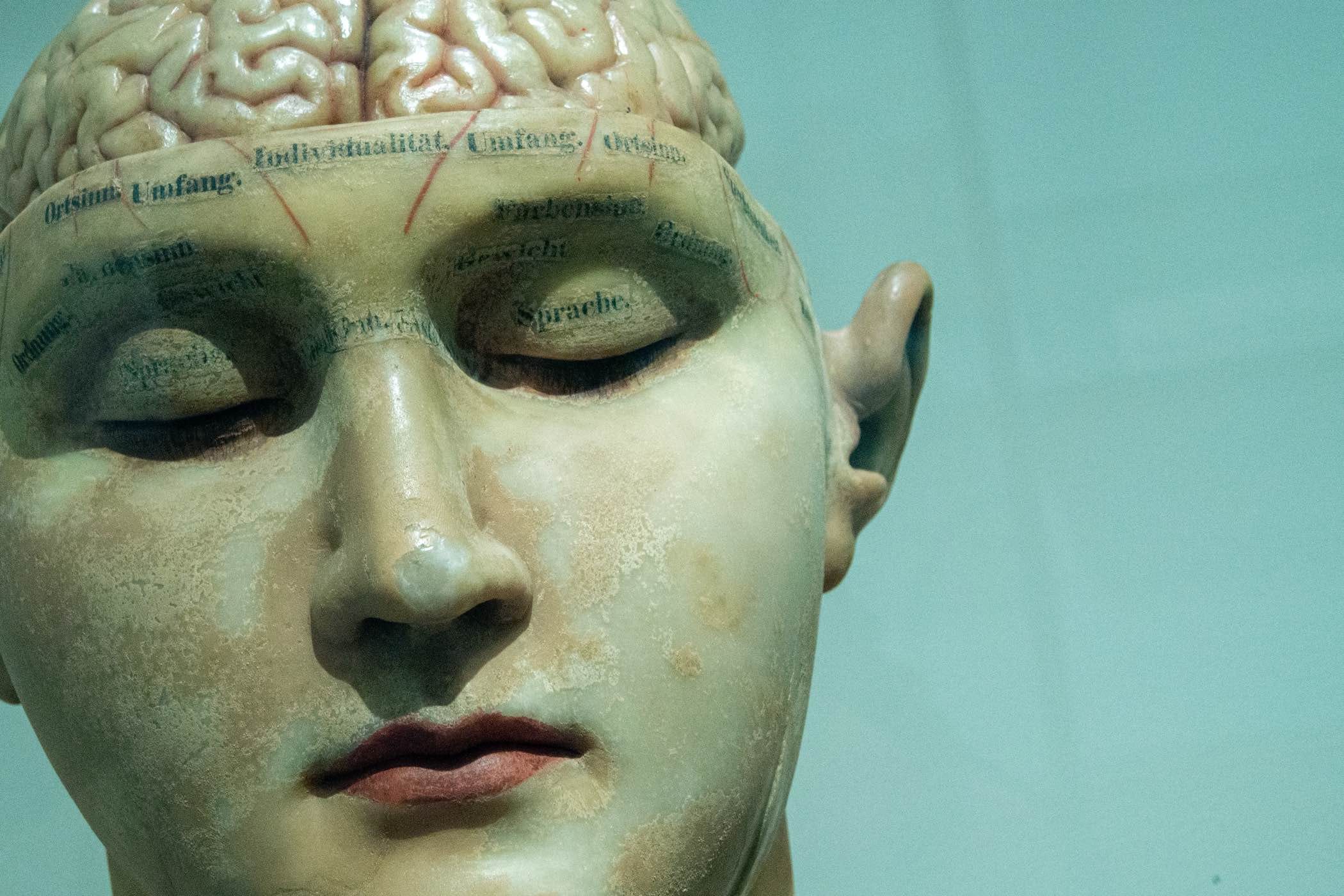
The Conscientious stage is the target stage for Western culture. Our educational systems are intended to produce adults with the mental capacity of the Achiever stage, that is, rationally competent and independent adults. Democracy as a form of government is based on the capacity of its independent-thinking voters to make reasoned and informed choices.
Conscientious peoples add linear time (consciously thinking of their past and future selves) as concern to the third person perspective. This stage expands the meaningful social context to others within the same society and others with similar ideologies and aspirations. Conscientious peoples are more likely than Conformists and Self-conscious adults to associate with people who have made choices about their ideals and the kinds of goals they value. They can belong todiverse groups at the same time with different agendas and characteristics without feeling torn among them or getting confused regarding competing loyalties.
Persons at this stage are interested in reasons, causes, goals, consequences and the effective use of time. They are curious what makes themselves and others “tick” in more than a “why” way. Conscientious peoples may also become interested in the truth about themselves through feed-back and introspection. They learn to understand themselves backwards and forwards in time, and describe past feelings, personal dreams and future goals, although their emphasis is likely more future-oriented.
Conscientiousness stage 4 (achiever)
Conscientious adults generally believe in the perfectibility of humankind and in the scientific method to “uncover” truth. Formal operations and abstract rationality are at their peak use. People believe that the proper scientific methods of investigation and procedures will eventually lead to the discovery of how things really are, including human nature. Conscientious adults are willing to work towards the betterment of the world according to what they deem as good for all. They have more tolerance than Self-conscious persons for some delay between positive action and results, research and findings, questions and answers and are less likely to believe that they do not need others to achieve their goals.
Conscientious adults have internalized societal standards. They are no longer as proud of what they have come up with as Self-conscious people and are more aware of how they have become and are still in the process of growing. It is with the Conscientious stage that people have enough of a perspective on themselves as objects and on their life as changing to become truly introspective. “Do I live up to what I believe in?” is a serious concern and Guilt is a central emotion. When aggression is turned inside, self-criticism can be severe. Conscientious individuals fall prey to hypercritical, neurotic self-criticism especially easily because their plans and intentions are so single-minded and high-aiming.
Expanded 3rd person perspective: Able to see self and others both backwards and forward in time Æ patterns of behavior
Realm: Self in society, others with similar goals and aspirations
Time frame: Self as it is (traits), self as it should be (goals, ideals)
Cognition: 4b, formal operations; clear separation of subject and object, knower and known.
Preoccupations: Reasons, causes, goals, achievement, effectiveness, contracts and agreements.
Positive equilibration: rational, analytical determined, conscientious, fair; successful; competent with high self-esteem
Truth: Can be found through appropriate scientific methods if not now Æ later. Past Future Conscientious .
With awareness of time as a linear progression, there is also a greater capacity to observe one’s motivations across different periods and in different actions. “Why do I do what I do?” Conscientious individuals are always looking for the root causes and reasons. They believe that the truth about themselves can be found. They are capable of distinguishing feelings from appearance and are motivated to figure things out.
Thus, the analysis of others and self-analysis become a favorite pastime and challenge. Many typologies and theories about human behavior come out of this motivation to classify and understand other human beings. Conscientious folks, often cherish self-knowledge, and work on expanding it. They generally have positive self-regard based on their successes, ability to be the master of their ships, the sense of independence and self-authorship that they have gained. As captains of their own self enterprise, they are no longer as vulnerable to being accepted or excluded as Conformists and Self-conscious adults.
Because of the genuine interest into who others are and the concomitant need to share one’s experience, interpersonal relationships become intense and meaningful. Thus social contacts become increasingly diverse and rich. Others are appreciated for having different expertise as long as they don’t encroach upon my beliefs. “We agree to differ” is a typical Conscientious-type compromise that keeps the definite boundaries between us intact. Increased self-differentiation and personal independence does not, however, involve more egotistical and self-centered behavior. On the contrary, others can now be valued for who they are independently of one’s own needs and wishes. One joins any group or society as a contract in order to accomplish certain goals, to fulfill agreements, and to actively partake in the well-ness and governing of the overall enterprise. One’s loyalty is to a chosen belief system rather than to the individual proponents of them. Unlike Conformists and Self-conscious people, Conscientious adults function well in different teams and contexts depending on the task or problem to be tackled.
Time is money and the medium to accomplish things. Conscientious persons are preoccupied with getting things done with responsibility, conscientiousness and expediency. They may have a driven quality to accomplish something in this world or to improve the world versus the need of later stages to develop oneself. The mood of the stage is earnest conviction, seriousness, idealism and enthusiasm usually oriented towards action. Conscientious persons change others’ minds by convincing them with rational arguments and evidence rather than by putting them down. Their self-esteem depends on achieving their own set goals and lesser on external affirmation and approval. The drive to succeed and achieve, can readily lead to over-extension and exhaustion. Limits are difficult to acknowledge for the Conscientious person. Engaged in their projects, they hardly slow down to look at the present moment, to reflect upon life as a whole.
Given their cognitive capacity, Conscientious persons are in love with the hypothetical, with theories at the espoused level. They are convinced that society can be controlled and improved. They have the frame of mind where formal operations are at their peak and rationality, progressivism, positivism and reductionism have their strongholds.
For Conscientious persons, rationality will triumph! Thus they are interested in analysis (ana-lysis = breaking up). Truth can be found. One can come closer to it by consistently applying the scientific method, by looking at things rationally, by continuously improving and refining one’s methods of inquiry and measuring tools. While Self-conscious people tend to rely on authority or received knowledge to orient themselves (a renowned expert, or book knowledge), Conscientious individuals can be skeptical. Conscientious researchers are known for their intellectual skepticism towards things that are not yet proven. However, they do believe that the laws of the universe can be figured out eventually and proven.
Impulse control/character formation: Societal values and morality are internalized if they fit self-evaluated standards and one’s personality. Conscientious persons tend to be self-critical, even hypercritical. They now may feel guilt for consequences of actions even when these were unintentional or unavoidable. They are self-reliant, conscientious, and efficient and preoccupied with attaining goals and ideals.
Interpersonal style: Conscientious persons have a sense of responsibility and obligation towards others even while they pursue their own agendas and ideas. They see themselves as indispensable, contributing members of the larger community or society, yet separate and responsible for their own choices. They are conscious of the importance of communication and appreciate the mutual expression of differentiated feelings and ideas.
Cognitive style: Conscientious persons can think in terms of formal operations and are beginning to appreciate conceptual complexity as well as the nature of a closed system. They are aware of contingencies and perceptions of alternatives and begin to notice contradictions and inconsistencies both within themselves and in the belief systems they adhere to. They are concerned about consequences and priorities and are planful about their actions, capable of revision and assessment as well as reorienting towards new goals.
Conscious preoccupations: Achievement of long term personal goals as measured by inner standards is important as are the attaining of one’s ideals and values. These are often the ones currently most salient in the cultural surround. Thus, the money motive and the focus on individual success of many Conscientious persons fit very well with the capitalism and the western outlook on reality. Conscientious individuals are often also concerned with motivation and reasons for behavior. Many reflect on themselves and express more differentiated feelings or contradictory traits. “I’m an optimistic pessimist.”
Internal dimension: Conscientious individuals are interested in feelings, moods, traits, and motivations. “Why do I do that? What causes others to be what they are and to behave in certain ways?” How can I use my knowledge of them, to help us achieve our goals.
Decision making: When they take responsibility to do something about a recognized problem, Conscientious persons can move with conviction. They are concerned with how to get started. “How do you get people to help? What is the most efficient and effective strategy to get this job done?” Conscientious persons are willing to take risks and to fail to a degree people at earlier stages cannot.
Organizational style: Alliances are task-related or problem-oriented. How one relates depends on the specific task or problem and one’s role in the group which changes in different settings.
Chief defenses: Intellectualization, rationalization, suppression (bracketing out) of negative pole and shadow side are the chief ways the Conscientious person defends against doubt and criticism. “Better to concentrate on the positive and on what can be done than to dwell on the problems and difficulties.” Better to say, I am sorry, than not to act when opportunity arises.”
Character of depression: Conscientious persons most often suffer depression in the form of guilt for not having fulfilled their goals and ideals, for the loss of a sense of being able to accomplish them, and the ongoing fear of loss of control and independence.
Fear: More even than Self-conscious adults, Conscientious persons fear the Conformist frame of mind with its dependency and submission. Blind obedience and uncritical absorption of ideas is seen as “bad-me.” Conscientious persons must make sure they are not pulled back, unconsciously subsumed in someone else’s goals. Fear of loss of new progress, control and separateness are overcome with action and relentless forward moving.
Counseling style: Like Self-conscious individuals, Conscientious persons tend to ask lots of questions. However, they also ask questions like “How is it? What does it feel like?” There have a greater ability to listen to others’ experience and play-back (restate) expressions without adding their own interpretation.
Language clues: Conscientious persons recognize and express conceptual complexity and explicitly refer to causal relationship, consequences and priorities. We find many terms related to time (efficiency, planning, goals, future) as well as implicit references to lapse of time (now, used to, when I was a child; is growing). Conscientious persons begin to describe themselves as complex psychological beings using differentiated psychological vocabulary. In SCT protocols one begins to be able to get a sense of the unique individual. “I” statements are revealing, not cliché, and often contain some elements of contrast, self-criticism & ownership of responsibility.
The major limit of the conventional mind set is its acceptance of facts and the external world as real and its blindness to the constructed nature of beliefs, especially the grand myth of conventional science. Although complex scientific analysis is applied, the underlying assumptions of any system are rarely questioned or made explicit. Especially at this stage, knowledge, measurement and prediction are taken for granted as means to control nature, self and society. This attitude changes dramatically with postconventional development.