

An anthropologist's perspective on zionism?
Drawing on the late David Graeber’s work.

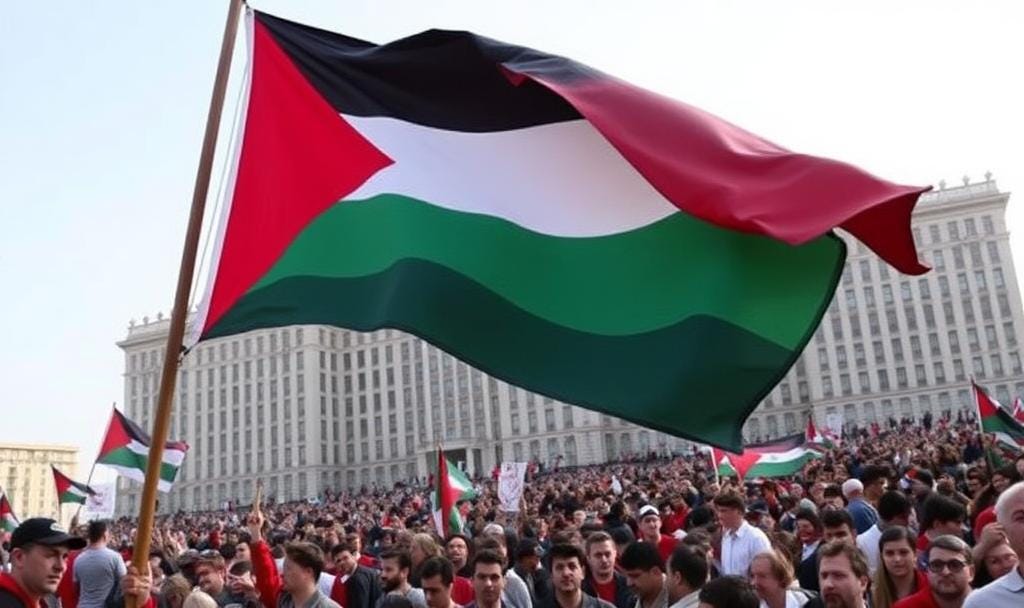
So, Israel and Zionism, huh? If you look beyond the bumper stickers and soundbites, what you find is a story not just of a nation but of power, displacement, and narratives—or as Graeber might put it, a carefully constructed story that holds everything together while obscuring the less savoury parts. Zionism started as a nationalist movement in the 19th century with a pretty straightforward goal: to establish a homeland for Jews in Palestine. But like so many political projects, it didn’t happen in a vacuum. It became entangled with Western imperial ambitions and geopolitical shuffles. The neat, heroic story you often hear in Western media about democracy and liberation? That’s where the real smoke and mirrors come in.
What Graeber would really have a blast tearing apart here is the idea of control—not just the muscular kind with tanks and guns but the soft control of narratives, media framing, and what counts as “truth.” Israel’s relationship with the U.S., for example, is not just about lobbyists whispering in congressional ears (though, yes, there’s plenty of that), or AIPAC’s funding. It’s about weaving a shared story of “us versus them,” making unconditional support almost a default position in Washington, backed by think tanks and a media machine that rarely questions this. It’s a power dance involving politicians, pundits, and path-dependent political interests. The result? U.S. foreign policy that bows deeply to that narrative, sometimes at the expense of its own ideals or citizens’ interests.
Now, here’s an itch many like Graeber would scratch: the difference between real influence and outright control. It’s tempting to fall into conspiracy land—the idea that Israel puppeteers the West with an iron grip. Graeber’s more subtle and nuanced—the power here is relational, structural, and maintained by mutual interests and collective forgetting. It’s a system that benefits elites on both sides, and critics of Israel’s policies are often shouted down under the shadow text of antisemitism, which mixes legitimate concerns with dangerous prejudice.
Speaking of antisemitism, the conflation of legitimate criticism of Israeli government policies with antisemitism is a story Graeber would call out sharply. It’s a tactic of silencing that convenience powers and protects this status quo. He wanted to open space for debate and accountability, recognising antisemitism as a real threat but also defending the right to critique state violence.
Then, there’s that grim topic of ethnic cleansing and genocide claims. It’s heavy stuff. Since 1948, Palestinians have faced forced displacement, village demolitions, and relentless pressure—a process that some scholars, including Ilan Pappé, have described as ethnic cleansing. The United Nations and human rights organisations increasingly document severe acts like systematic violence, displacement, and bombardments in Gaza that meet definitions of genocidal acts in international law. And you don’t have to look far to see the daily reality on the ground: expanding settlements in the West Bank, often enforced by violent settlers and supported or enabled by Israeli military presence, systematically uprooting Palestinians from their homes and land.
The settlers themselves? Imagine a tinderbox waiting to explode. Settler violence includes arson, attacks on people and property, theft, and outright intimidation. Thousands of Palestinians have been displaced in recent years, with evidence showing soldiers often stand by or even tacitly allow these attacks. This isn’t just chaos; it’s part of a broader strategy to carve out more territory, consolidate control, and frankly, erase Palestinian presence in many areas.
Graeber would bring a powerful mix of personal commitment and academic rigour here. His reflections from visits to the West Bank paint a picture of an environment where Palestinians live under grinding, continuous violence designed to degrade and disempower. Israel’s policies have transformed into a sort of military-scientific operation, targeting civilians in ways that extend beyond war into structural devastation—destroying infrastructure, limiting access to food, water, and medical care, ramping up control while externalising the narrative as a fight against terrorism.
What comes through in Graeber’s later essays is an unflinching empathy combined with a sharp critique of Western complicity. This isn’t just about drones dropping bombs or tanks rolling through streets; it’s about how entire systems of power, law, and international politics condone or turn a blind eye to such violence. He constantly reminded us all that the conflict’s story is also a story of global politics—elite collusion, broken accountability, and failed international institutions.
He didn’t shy away from the complexity. Raised with Zionist influence, he nonetheless found himself unequivocally pro-Palestinian. His writing refuses to reduce the conflict to Manichean terms. Instead, it insists on the humanity of all involved and the absurdity of holding onto narratives that perpetuate suffering. His voice calls for a genuine democratic solution shaped from below, by Palestinians and Israelis alike, free from the ghosts of colonial and sectarian violence.
And just to toss in some of his own words, Graeber himself wrote:
1. On Zionism and his stance:
“I can unequivocally say I’m pro-Palestinian and pro-Muslims and Arabs, pro-Bedouins, pro-every ethnicity and peaceful religious group found there… I consider myself anti-Zionist because I believe the current state is an apartheid state founded on the displacement of Palestinians, and is currently committing a genocide in Gaza… I want to see peace, equality, and freedom for every human being in Israel-Palestine. Whether the path to that goal takes an anti-Zionist or post-Zionist shape… is ultimately up to Israelis and Palestinians, not up to me. I can only focus on my activism in the diaspora.”[reddit]
2. On the entrenched conflict and peace process:
“One should never underestimate the power of institutions to try to preserve themselves. One explanation for the thirty-year impasse of the Israeli-Palestinian ‘peace process’—if at this point one can even call it that—is that on both sides, there are now powerful institutional structures which would lose their entire raison d’être if the conflict ended.”[goodreads]
3. Describing Israeli policies as systematic violence:
“Palestinians in Nablus are living in an environment where insane things do happen; where there actually are people conspiring against them.”[davidgraeber]
Graeber also emphasised how Israel’s conduct is embedded in colonial and apartheid-like systems and highlighted the complicity of global powers, including sanctions and military support, that sustain these conditions. His reflections combined a commitment to human solidarity with a critique of powerful institutional and ideological forces perpetuating the conflict.[reddit +2]
These quotes capture Graeber’s nuanced position: a firm opposition to Israeli policies as oppressive and violent, alongside a hope for a just, egalitarian resolution shaped by Palestinians and Israelis themselves.
Well, i want to blast Zionism to pieces both ways. By squashing their influence and marching towards Jerusalem itself. If they use their nukes, i can just hack into their defences and shoot ‘em down.